Freeware for Android · by G7JJF

G7JJF APRS Client

A complete APRS station in your pocket. Connect to the internet APRS network, to your radio over Bluetooth, BLE or USB, or to Direwolf in the shack — and see everything on one live map, in one message inbox, and on your car's dashboard through Android Auto.

  • Google Play: version 1.9.1
  • Test builds: version 1.9.9
  • Android 8.0 or later
  • Phones, tablets, Wear OS and Android Auto
  • Free — no subscription, nothing locked
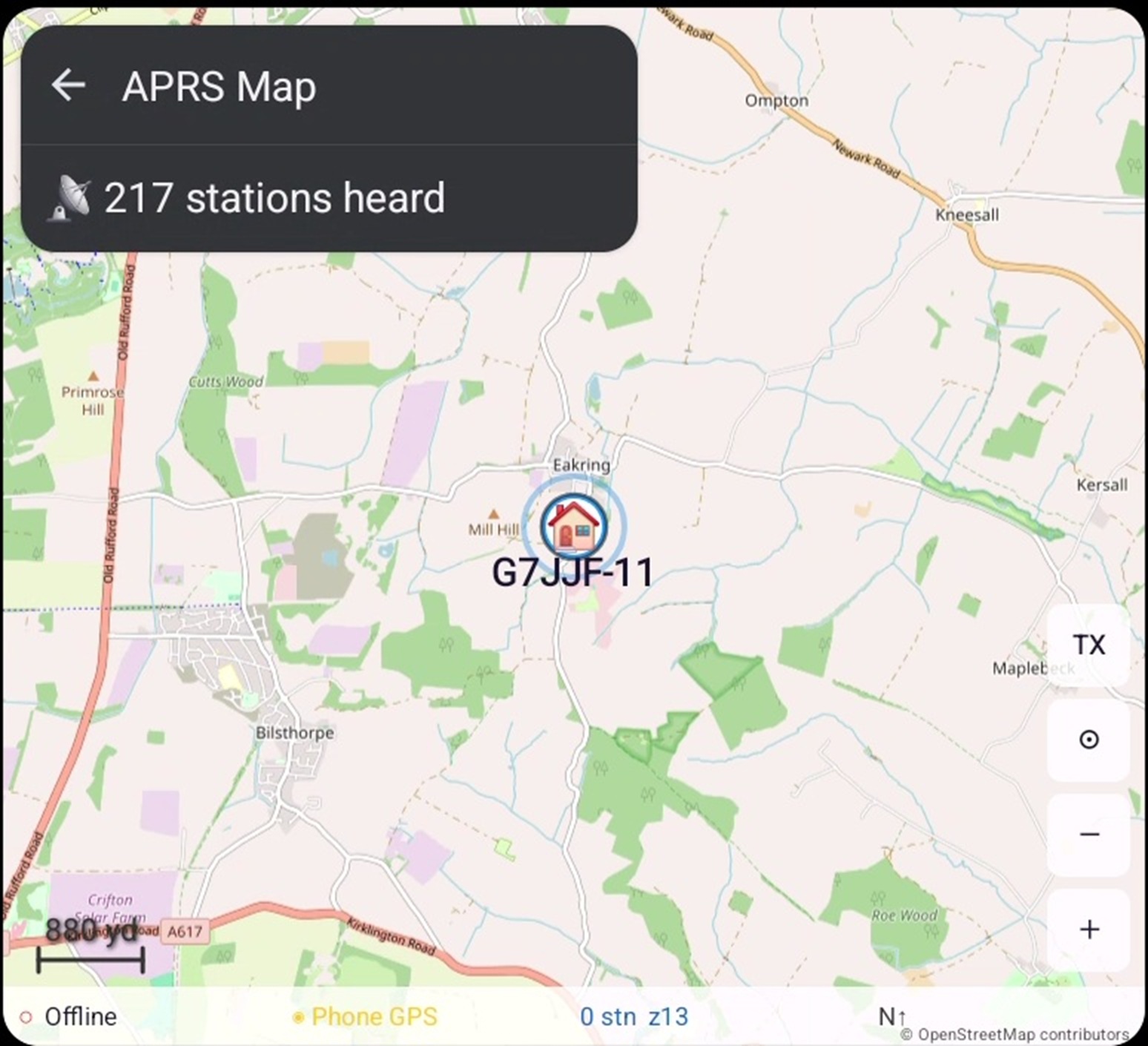
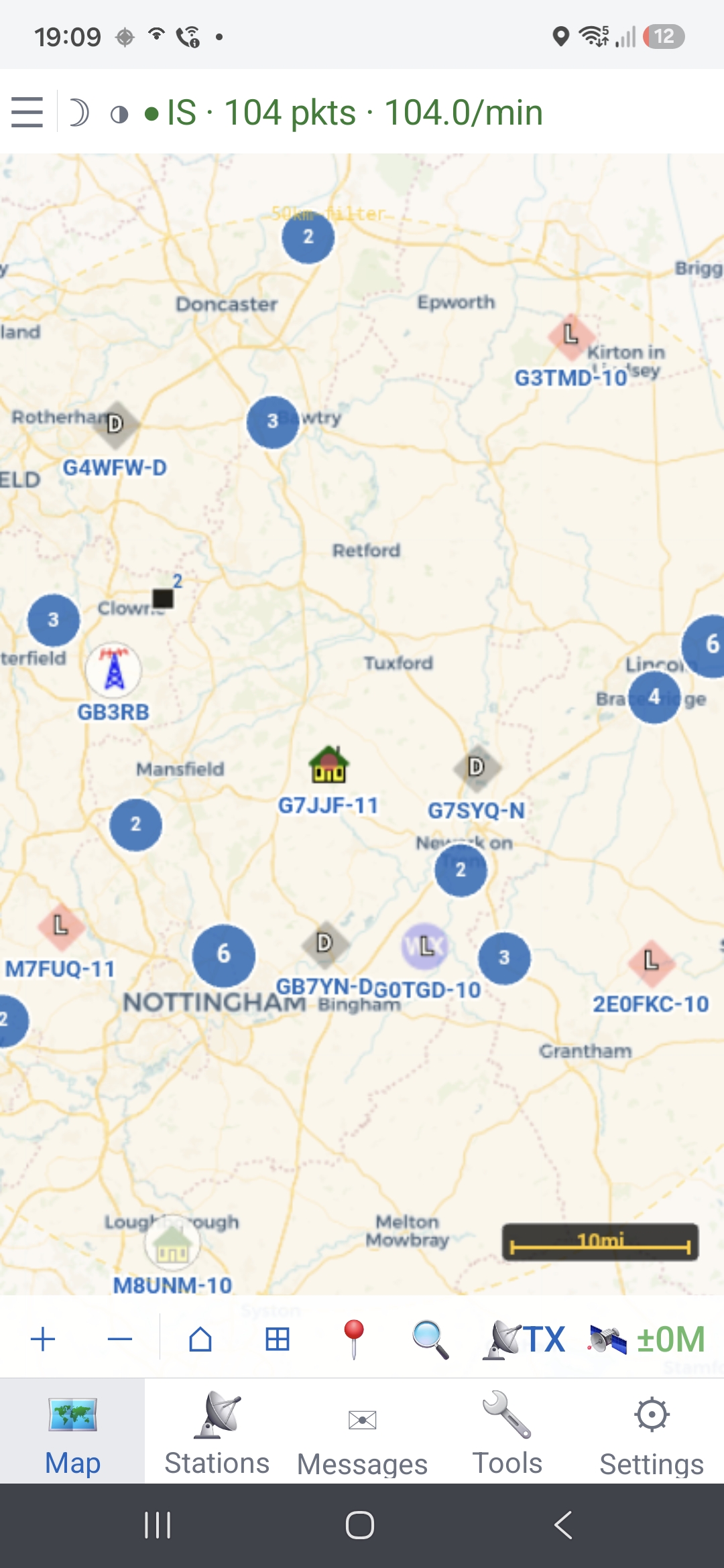
Live map showing APRS stations and their trails

Everything in one place

Whatever a station was heard on — APRS-IS, a Bluetooth TNC in your pocket, a Raspberry Pi running Direwolf, or the phone's own microphone — it lands in a single packet stream. The map, station list, messages and alerts all work from that stream, so you see every station in the same place and reply to it in the same way.

APRS-IS client

Range, prefix, buddy and custom server filters, automatic passcode, keepalives and automatic reconnection.

Six RF interfaces at once

TCP KISS, Bluetooth Classic, Bluetooth LE, AGW, USB serial and a built-in audio soft-TNC — all can run together.

Live map

Four base layers, official APRS symbols or emoji, trails, clustering, range rings, waypoints, KML and GeoJSON overlays and offline tiles.

Messaging that works

Conversation threads with acks, automatic retries, APRS 1.1 reply-acks, long messages sent in order, an outbox for when you're out of coverage, delivery details, templates, reply straight from the notification, and an auto-reply for when you're driving.

Beaconing

Fixed-interval or SmartBeaconing with corner pegging, from GPS or a fixed QTH, compressed or plain, with optional altitude and battery level — and position privacy near home.

RX and TX iGate

Gate RF to APRS-IS and messages back to local RF stations, with correct q-constructs and third-party format.

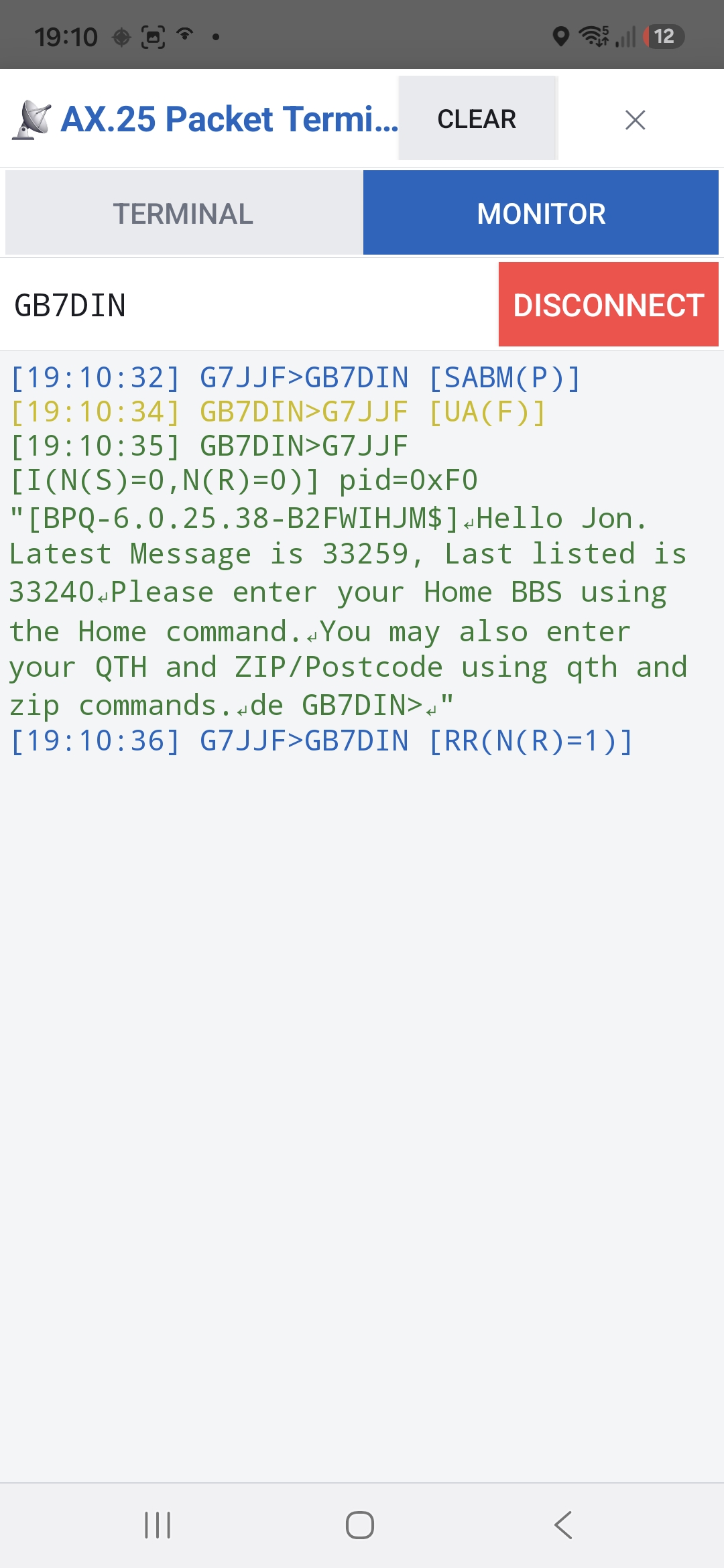
AX.25 packet terminal

Connect to BBSs and nodes such as BPQ and FBB — one connection per radio, even through the audio modem — with a monitor that decodes every frame, including NET/ROM.

Full APRS decoding

Compressed and Mic-E positions, DAO, weather, objects and items, telemetry, status, bulletins and NWS alerts.

Alerts

Watch list, geo-fences, proximity to your own position, weather thresholds, bulletin keywords and ISS pass reminders — spoken aloud if you like.

Digipeater and Beacon Check

A fill-in WIDE1-1 digipeater, and a report of how each RF beacon reached APRS-IS — with a coverage map of where you get out and a list of the digipeaters and iGates that hear you.

Packet paths on the map

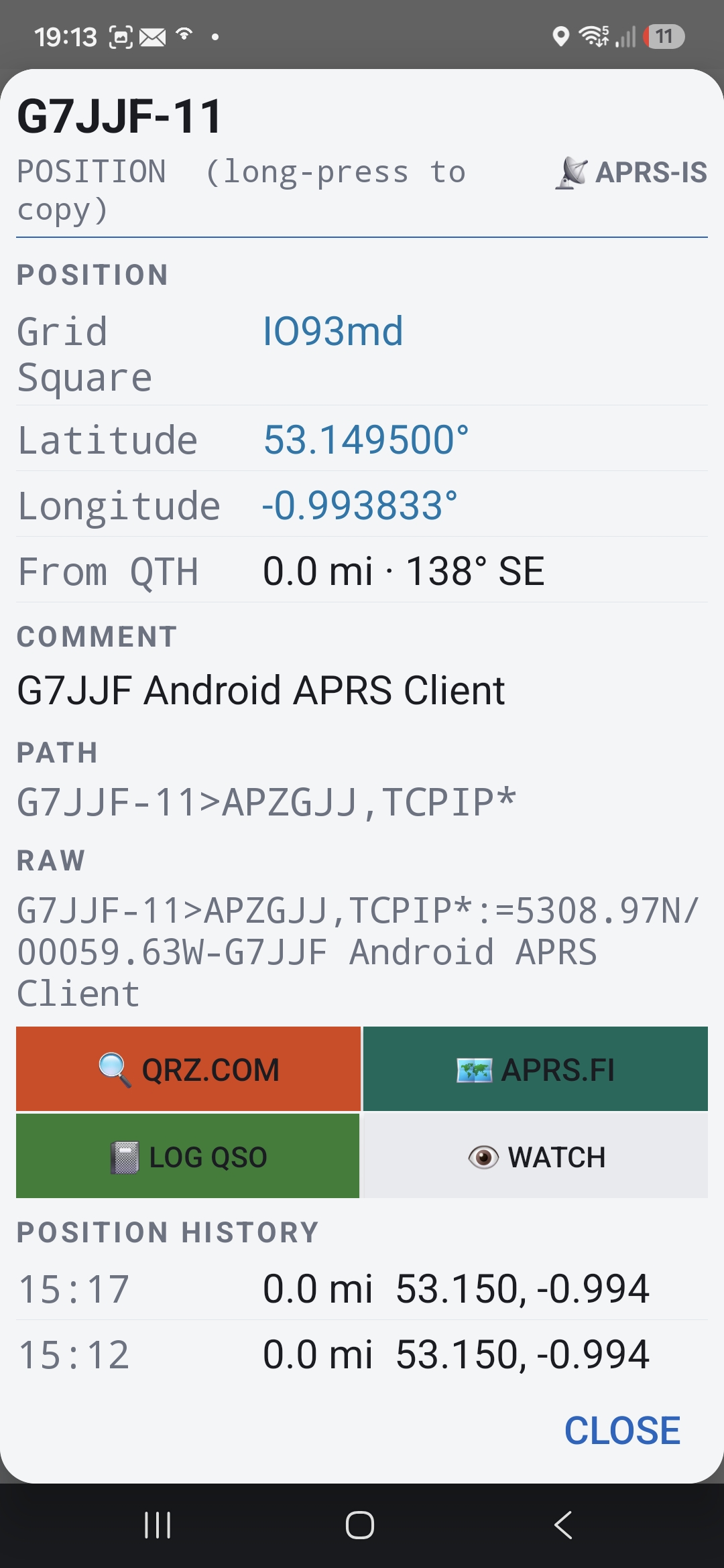
Tap a station to draw the route its packet took, through each digipeater to the iGate or to you, and look up the operator on HamQTH.

Public service events

An event board of the stations taking part, with last heard, speed and checkpoint times from your route file, a group message and a CSV log.

Your radio, on the network

The TNC Bridge turns the phone into a KISS TCP/IP TNC for PC programs, and Radio Control picks channels on Benshi-firmware handhelds.

On your wrist

A Wear OS companion with a tile and a watch-face complication: Beacon now, conversations with quick or spoken replies, nearby stations with their details and weather, a compass to find a station, and an emergency button — with no battery drain when it is closed.

Automation

Tasker, MacroDroid and others can send beacons and messages, and react when a message arrives or a station comes near.

Phone barometer

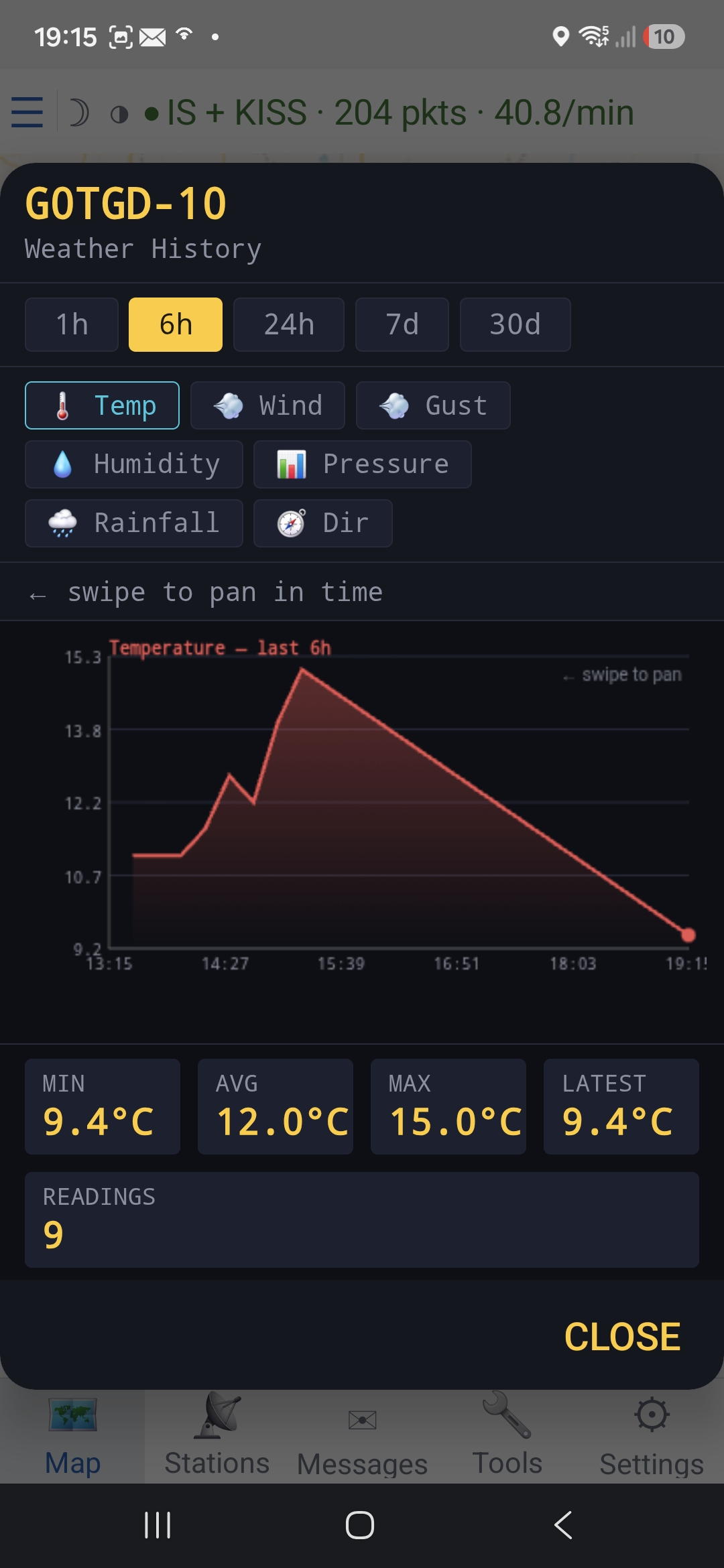
Pressure, 3-hour trend and a 48-hour chart from the phone's own sensor, with optional APRS weather reports.
New in versions 1.9.1 and 1.9.2

Version 1.9.0 brought Radio Control for current UV-PRO firmware, much longer watch battery life, crisp map labels on any map, and a choice of the side-by-side tablet and landscape layout.

Version 1.8.9 added the emergency beacon and emergency alerts, 300 baud HF APRS in the built-in audio modem, weather radar over the map, the tablet and landscape layout, packet capture and replay, spoken messages and offline maps for any area.

Version 1.8.6 added the Wear OS watch app, Tasker automation, TNC Bridge, Radio Control for UV-PRO and VR-N76, the Event Board, ISS satellite mode, a station-finding compass, GeoJSON overlays and a setup wizard.

Version 1.8.4 added more APRS services (MPAD, QRX, APRS2SOTA, Telegram and WhatsApp gateways and others), spoken and proximity alerts, packet paths on the map, HamQTH lookups, the phone barometer and tabbed settings.

Works with the radio you already have

Use the KISS TNC built into many modern handhelds, a hardware TNC, or software on a PC — several at the same time if you like.

Bluetooth LEBTECH UV-PRO, VGC VR-N76, Radtel RT-950 Pro, Mobilinkd TNC3/TNC4, kv4p-ht, HM-10 serial modules, ESP32 and LoRa trackers. No pairing needed.
Bluetooth ClassicAny paired SPP TNC, in KISS or text mode.
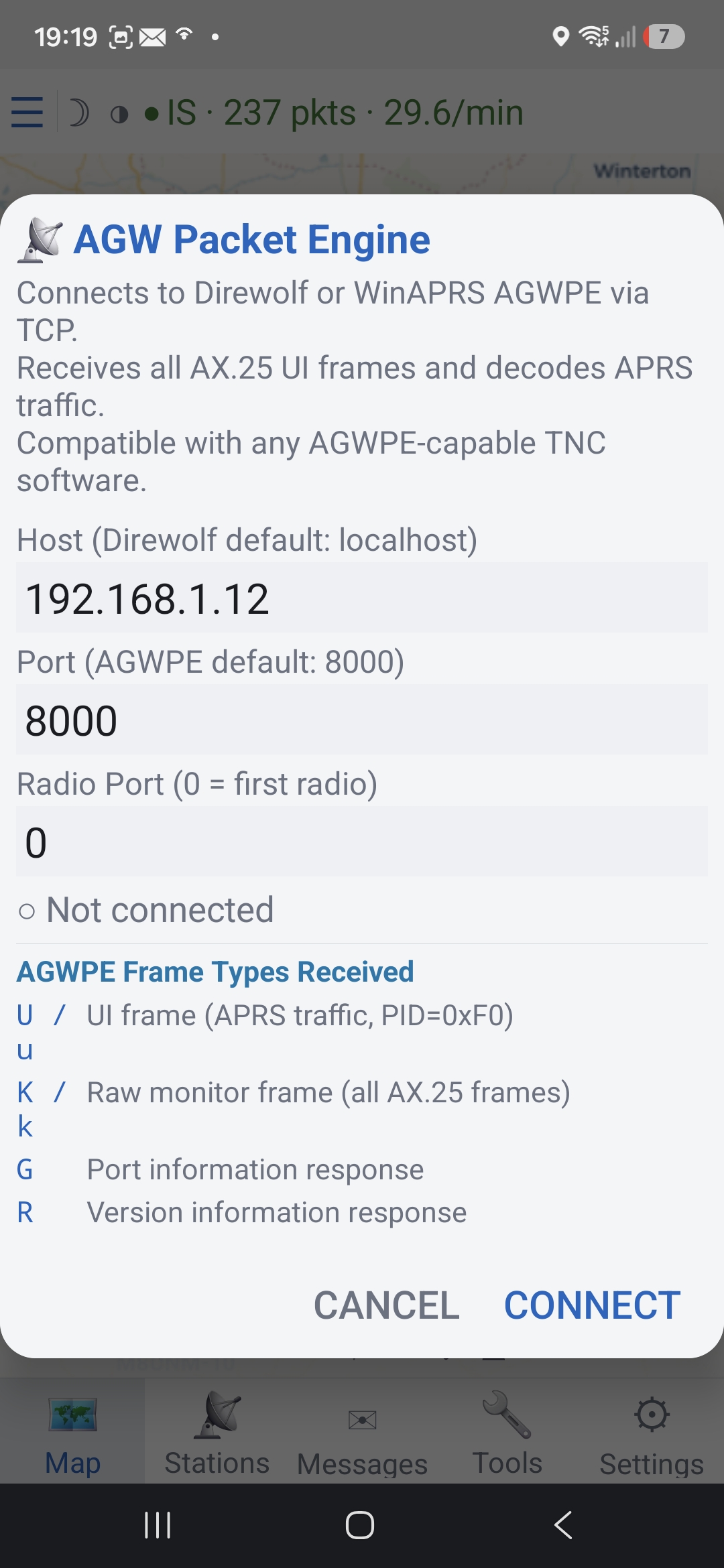
TCP KISS / AGWDirewolf, UZ7HO soundmodem, AGWPE or a TNC on your network.
USB serialKV4P HT and CP2102, CH340 and FTDI-based TNCs over an OTG cable.
AudioBuilt-in 1200 baud soft-TNC using the phone's microphone and speaker with a VOX-keyed radio, with bit-clock recovery for reliable decoding.
Connections screen listing a BLE radio found by the scan

Connected-mode packet, done properly

The AX.25 terminal lets you connect to a BBS or node straight from your phone. It follows the AX.25 specification closely — timers, polls and finals, REJ recovery and window control — and adapts to v1 or v2 nodes automatically, so links stay up on real, noisy RF paths.

  • One connection per radio — Bluetooth, BLE, TCP KISS, AGW, USB or the audio modem — kept open when you close the window
  • Set a radio to packet only and it stays off APRS entirely — no beacons out, nothing decoded as APRS
  • Terminal and Monitor tabs side by side, each saveable to a file
  • Connect via digipeaters (GB7XXX via MB7YYY), with your own macros
  • Monitor decodes I, S and U frames, poll/final bits and NET/ROM traffic
  • Clear warnings when a TNC is slow or disconnects
AX.25 packet terminal monitor showing decoded frames

On the road with Android Auto

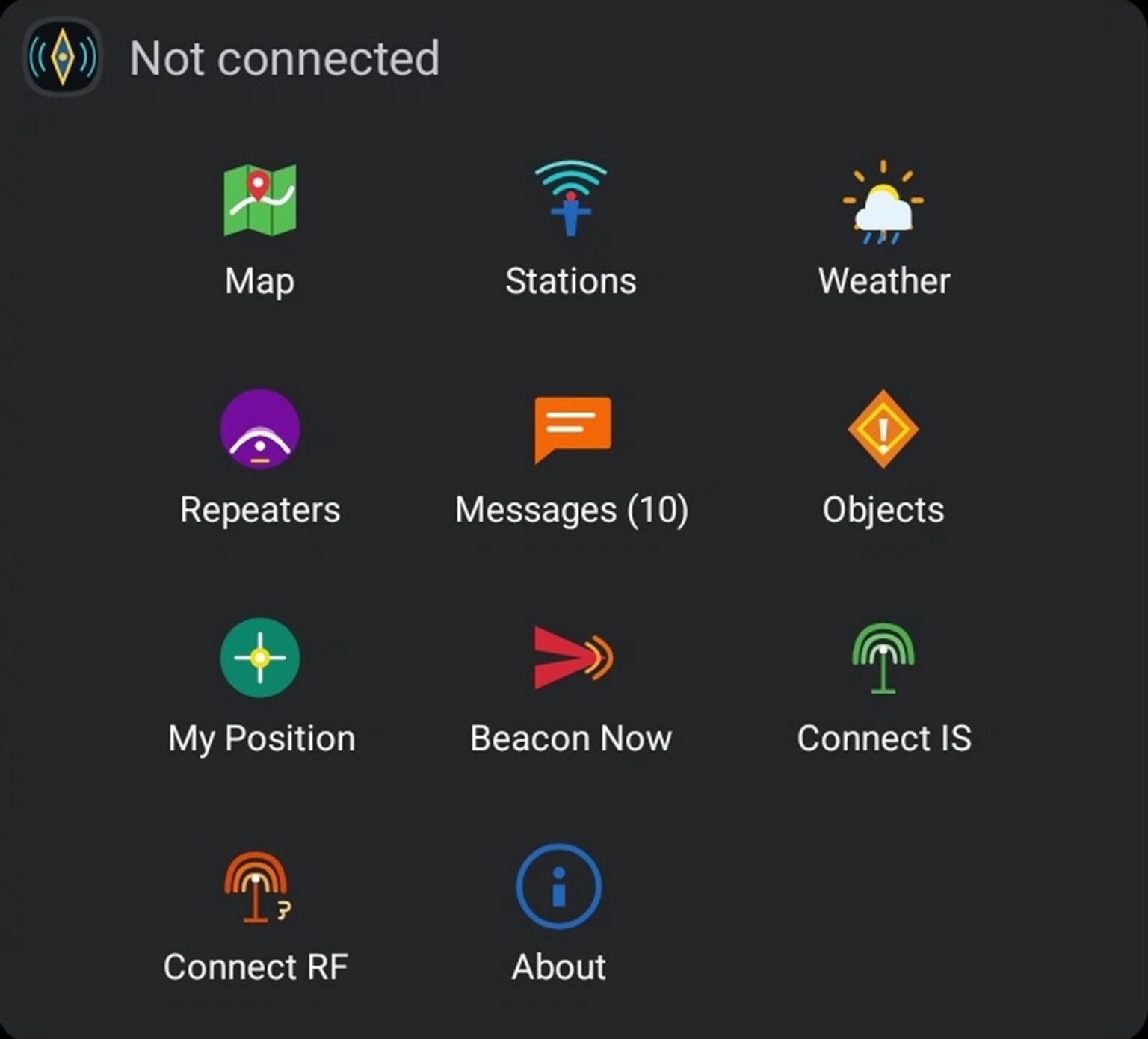
Plug into the car and the app appears on the dashboard: nearby stations, weather, repeaters and objects, your messages with one-tap quick replies, pop-up alerts, a live map with your car and its heading on head units that support it, Navigate to any station, and a one-tap beacon button.

The app's home screen on an Android Auto car display
Android Auto Home
The app's map screen on an Android Auto car display
Android Auto Map

A closer look

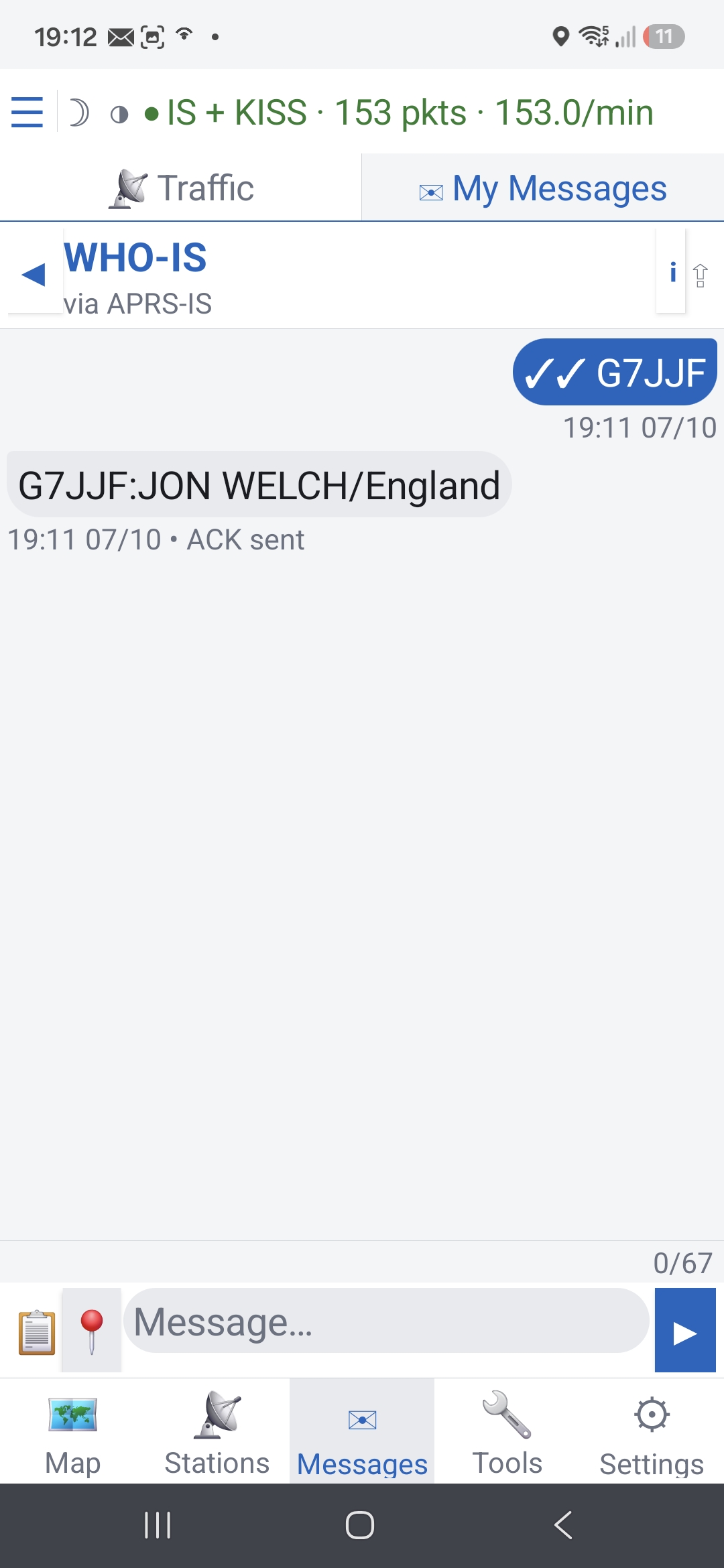
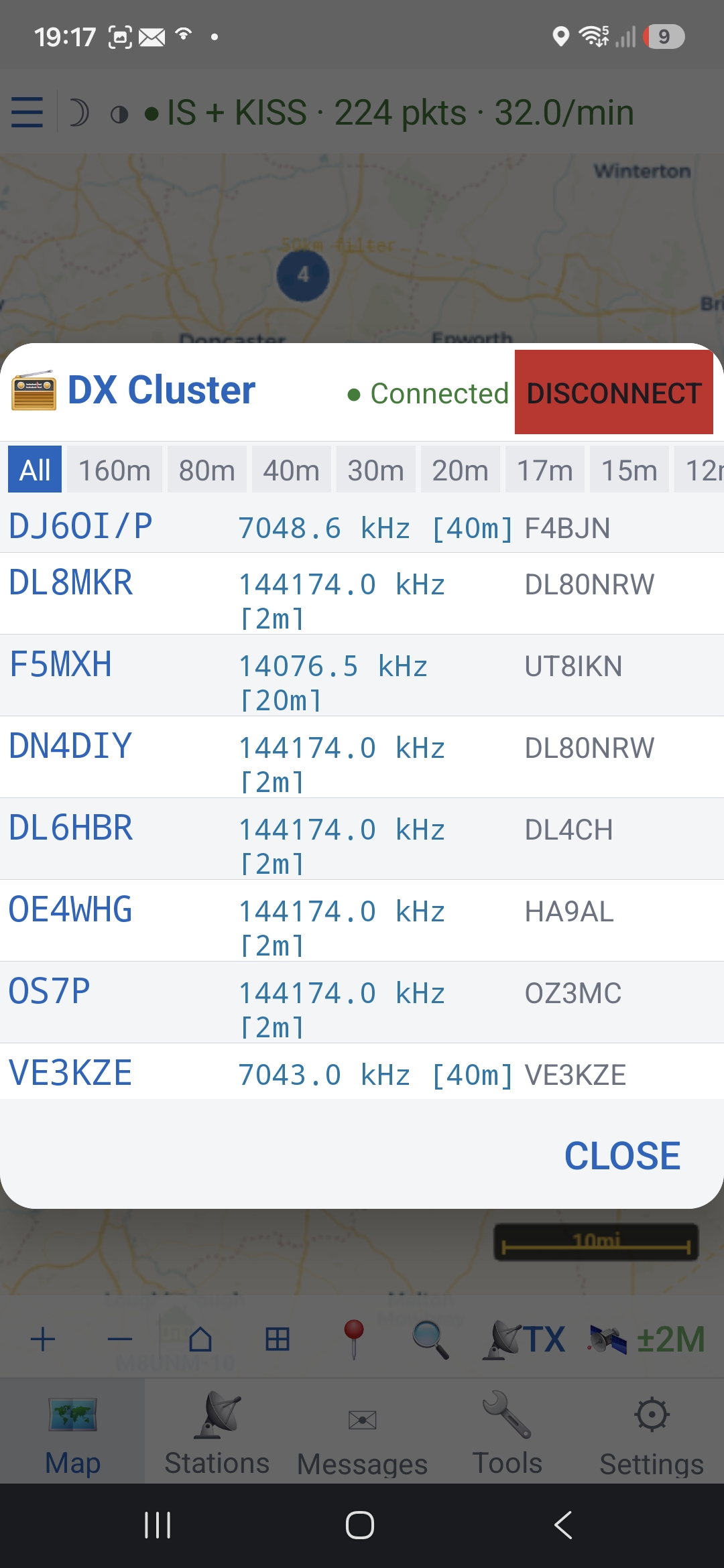
Plus the extras that make a day of operating easier: APRS services (ANSRVR, WHO-IS, MPAD worldwide weather, the QRX mailbox, APRS2SOTA spotting, SMS, email, Telegram and WhatsApp gateways and more), objects manager, DX cluster, ISS pass predictions and reminders, solar propagation, track log with GPX export, QSO log with ADIF export, a home-screen widget, Quick Settings tiles, station profiles and full backup and restore.

Read the manual

The full user manual covers every screen and setting, with a quick-start guide, connection set-up for each kind of TNC, technical reference material and the full list of changes in each version. Read it online, with search, or download it as an 80-page PDF.

Join the test programme

The app is now available on Google Play for everyone. Testing carries on: testers get each new version as soon as it's ready, before it reaches the Play Store, and help shape the app by reporting problems and suggesting features. Fill in the form and you'll receive an invitation link by email. You keep the same app — after joining, Play updates it to the test version.

Google Play can only invite testers by the email address of their Google account.

How will you connect? (tick any)

Your details are only used to send your tester invitation and contact you about the app.